

How Agentic AI Can Keep Your Best People’s Knowledge from Walking Out the Door
Every R&D organization has a version of the same problem: the people who know the most are often the closest to leaving. The engineer who can look at...
A Technical Framework for Materials by Design | View the recording for this timely webinar on Materials by Design for enterprise R&D.
3 min read

The digital age has introduced massive amounts of data and automation into the R&D process, irrevocably changing how scientific research is conducted. The recent advent of generative AI and large language models (LLMs) has only exponentially accelerated this shift.
Research today requires handling multi-dimensional datasets, running intricate simulations, and deciphering complex experimental outcomes. R&D data has transformed from being an asset to be managed into the secret sauce of a company’s innovation and competitive advantage. However, despite scientific data holding this massive potential, much of it remains untapped. The reasons why begin with the data itself.
The biggest byproduct of modern R&D, and one of the most challenging and exciting, is the sheer amount of research data available to scientists—historical data, data collected from experiments and instruments, data newly generated from predictive analysis, etc. How to bring it all together so it can be leveraged is complicated and overwhelming—and only resolvable with technology.
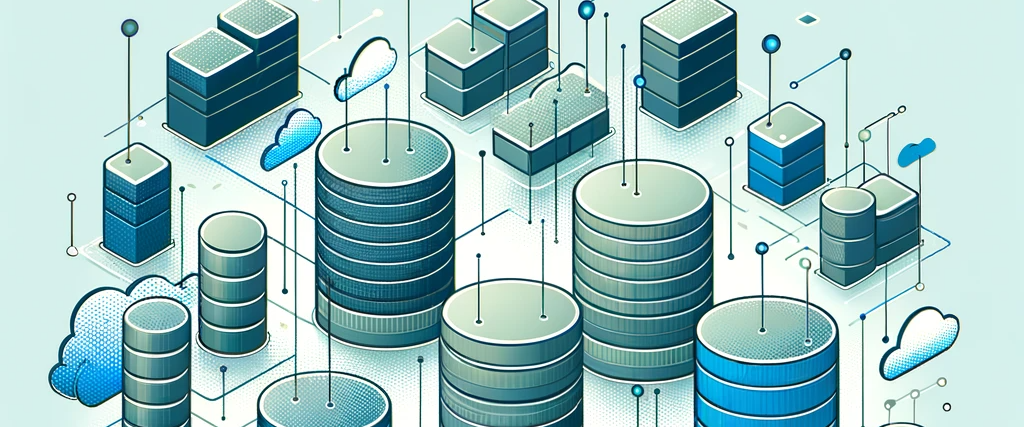
Most labs today operate under the data systems status quo. They have piles of inaccessible and incompatible data stored in a myriad of locations and formats, unusable for robust analysis and collaboration. Frustrating bottlenecks bring workflows to a crawl and hinder discovery and exploration.
The data is scattered and siloed in a multitude of locations: data warehouses, data lakes, data lakehouses, laptops, instruments, public databases, and collaborator’s data sources. The data takes many forms and formats, such as images, graphs, spectra, and genetic sequences, making it challenging for systems to talk to each other for automated analysis. Compounding these challenges is the deluge of new data generated on a daily basis.
Companies who deployed new R&D data management software just a few years ago are already feeling the limits of their tools as the volume, velocity, and variety of their research data continue to grow. Even many platforms currently on the market are not equipped to manage today’s multifaceted scientific data needs efficiently.
Without an agile and flexible data system design to address the data silo problem, R&D organizations fall behind and are unable to take advantage of advanced technologies like machine learning and AI. This widening gap plays out in market success and market share.
The answer? The data fabric.
A data fabric is an advanced design that seamlessly integrates disparate data sources and types across various environments—on-premises, cloud, or hybrid systems— into a cohesive and interconnected architecture.
Applicable in all industries, the data fabric architecture is especially relevant for scientific domains and research due to the complexities of scientific data. In practice, a strong data fabric in R&D removes data silos and analysis bottlenecks that scientists experience, allowing them to focus on their science, thereby accelerating discovery and productivity.
A data fabric is not a set of technologies but a set of virtualization layers that securely facilitate data access, ingestion, and sharing across an organization or enterprise. Forrester presents a data fabric being comprised of six component layers:
The benefits of a data fabric in scientific R&D are immense. Enthought has seen customers seamlessly eliminate bottlenecks, leverage previously unused data, and significantly reduce IT burden.
If you share some of these common challenges and pain points, you need a data fabric as a part of your lab’s technology solution set:
Scientific research data will only grow in complexity and volume and generative AI and LLMs will continue to amaze. Having a robust, flexible, and efficient data architecture is essential to keep up. By integrating a data fabric, R&D organizations can overcome the challenges of today and have the foundation set for what comes next.
Want to learn more? Contact us to talk to an Enthought expert about integrating data fabric into your lab today.
Check out more resources at enthought.com/resources.

Every R&D organization has a version of the same problem: the people who know the most are often the closest to leaving. The engineer who can look at...
This content was originally discussed in the presentation, From PoC to Production: Bridging the Gap in Scientific Software Development.

Why Science, Why Now? The frontier AI companies have placed a coordinated bet on science. OpenAI launched FrontierScience1 and signed an MOU with the...